Tips for Back-to-School Success: Seven Ways to Help Your Child Thrive This School Year
The first day of school is about so much more than new backpacks, sharpened pencils, and first-day photos. It’s the beginning of new friendships, new learning experiences, and new opportunities for your child to grow.
As parents, we often feel pressure to make everything perfect before the school year begins. But here’s the good news: your child doesn’t need perfection; they need preparation. The small things you do at home can have a lasting impact on their confidence, independence, and success throughout the school year.
Here are seven simple strategies to help your family start the year strong.
1. Reset the Routine Before School Starts.
Establishing routines early can help parents feel capable of setting their child up for success and reduce morning stress. One of the greatest gifts you can give your child is a healthy routine.
Instead of waiting until the night before school begins, gradually adjust bedtime and wake-up time about a week before the first day, taking your child’s unique needs into account. Moving bedtime just 15 to 30 minutes earlier each night helps children ease back into a school schedule without stress or exhaustion. This proactive step can make mornings smoother and reduce anxiety for everyone.
A well-rested child is better able to focus, regulate emotions, solve problems, and enjoy learning.
Remember, successful school mornings begin the night before.
2. Shop Your House Before You Shop the Store
Back-to-school shopping doesn’t have to break the budget. Before heading to the store, gather all of last year’s school supplies in one place. You might discover extra notebooks, folders, glue sticks, crayons, and enough pencils to supply an entire classroom! Once you’ve taken inventory, buy only what’s on your child’s school supply list. Then, let your child choose one fun item they’re excited about. Maybe it’s a colorful notebook, a new lunchbox, a special water bottle, or their favorite pens.
Giving children one meaningful choice builds excitement while teaching them an important lesson: we purchase what we need, not simply what we want.
Sometimes the smartest shopping trip begins at home.
3. Create a Learning Space Your Child Will Love
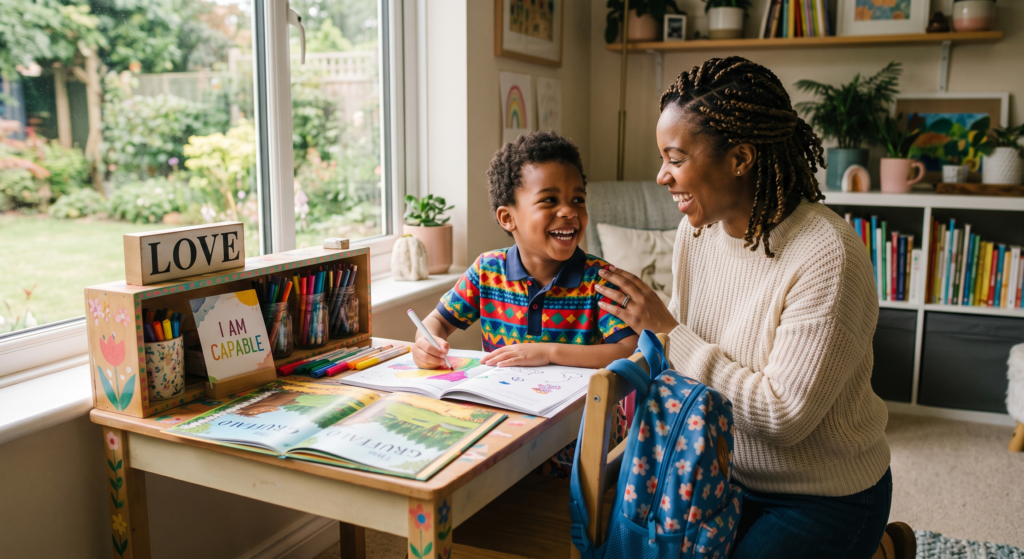
When parents involve their children in designing their learning environment, it builds pride and confidence in that space. Let your child help choose colors, decorations, or a favorite character to make the space feel welcoming and inspiring. This involvement fosters ownership, making them more excited and motivated to use the space for learning. Better yet, let your child help create their learning space, choosing colors, decorations, or a favorite character. This involvement fosters ownership, making them more excited and motivated to use the space for learning. Allow them to choose the colors, decorations, or a favorite character that makes the space feel welcoming and inspiring.
Don’t forget to include positive affirmations where they can see them every day. These simple messages like “I am capable,” “I can learn new things,” and “Mistakes help me grow “help children feel supported and valued, strengthening their emotional security. These simple reminders become powerful messages that shape the way children think about themselves as learners. We’re not just creating a homework space; we’re creating a place where confidence can grow.
4. Build Confidence Before the First Bell Rings
Long before children hear encouragement from their teacher, they hear it from home. Your words become your child’s inner voice.
As school approaches, intentionally speak life into your child.
Tell them you believe in them. Remind them of challenges they’ve already overcome. Celebrate their strengths rather than focusing solely on areas for improvement.
Children don’t need parents who have all the answers.
They need parents who remind them they already have what it takes to keep trying. Confidence begins with conversation.
5. Read Every Day
If there were one habit I could recommend to every family, it would be this: Read together every day. Just twenty minutes of reading each day strengthens vocabulary, comprehension, imagination, communication, and critical thinking.
Whether your child is reading independently, listening to an audiobook, or reading aloud with you, every page matters. Books don’t just prepare children for tests; they equip them with skills for life, including communication, empathy, and problem-solving.
6. Partner With Your Child’s Teacher
One of the most valuable school supplies your child will ever have isn’t found in a backpack. It’s the partnership between home and school.
Introduce yourself to your child’s teacher early in the year. Read classroom newsletters. Ask questions. Respond to communication and celebrate successes, no matter how small, to remind your child they are supported and appreciated. When teachers and families work together, children receive a powerful message: ‘The adults in my life are on the same team.’
When teachers and families work together, children receive a powerful message: “The adults in my life are on the same team.” That partnership creates a stronger foundation for student success.
7. Let Them Know
Before your child walks out the door each morning, pause for just a moment. Look them in the eyes. Smile. Then remind them of three things they should never forget.
- Let them know they’re loved.
- Let your child know they’re capable.
- Let them know they belong.
Your encouragement becomes the confidence they carry into the classroom.
Your belief becomes the courage they need when learning feels difficult.
Your words may only take a few seconds to say, but they can stay with your child for a lifetime.
A Final Word
As another school year begins, remember that your child doesn’t need a perfect parent. They need a present one.
They don’t need expensive supplies, elaborate lunches, or a picture-perfect routine. They need consistency. They need encouragement.
They need connection. Most importantly, they need to know that no matter what happens during the school day, home is a place where they are loved, supported, and celebrated.
So as you prepare for another school year, focus less on creating perfect moments and more on creating meaningful ones. Because when children know they are loved, capable, and valued, they don’t just survive the school year, they thrive.
Here’s to a wonderful school year filled with learning, laughter, love, and success.